
Guide
How to monitor online PDFs for change alerts
A regulator replaces last quarter's guidance PDF on a Friday afternoon. A vendor rewrites a DPA attachment. A procurement portal drops a new addendum into the tender pack. Nobody emails your channel. By the time someone re-downloads the file, the wording that binds you has already moved. The job here is narrower than "watch every PDF on the internet": when a public PDF you already rely on gains, loses, or rewords material content, the alert should land where compliance, legal, bid, and competitive intel already work, with a plain-language summary you can triage from. Example shape: Change detected on https://example.gov/guidance/circular-2026.pdf: Section 4.2 added a new reporting deadline of 15 business days and removed the prior quarterly exemption.
Free plan · 10 monitored URLs or sitemaps · AI included · PDF support · No credit card required
Kerro Page Deltasille mikä on tärkeää
ilmoita minulle kun SEC muuttaa sääntöä 242
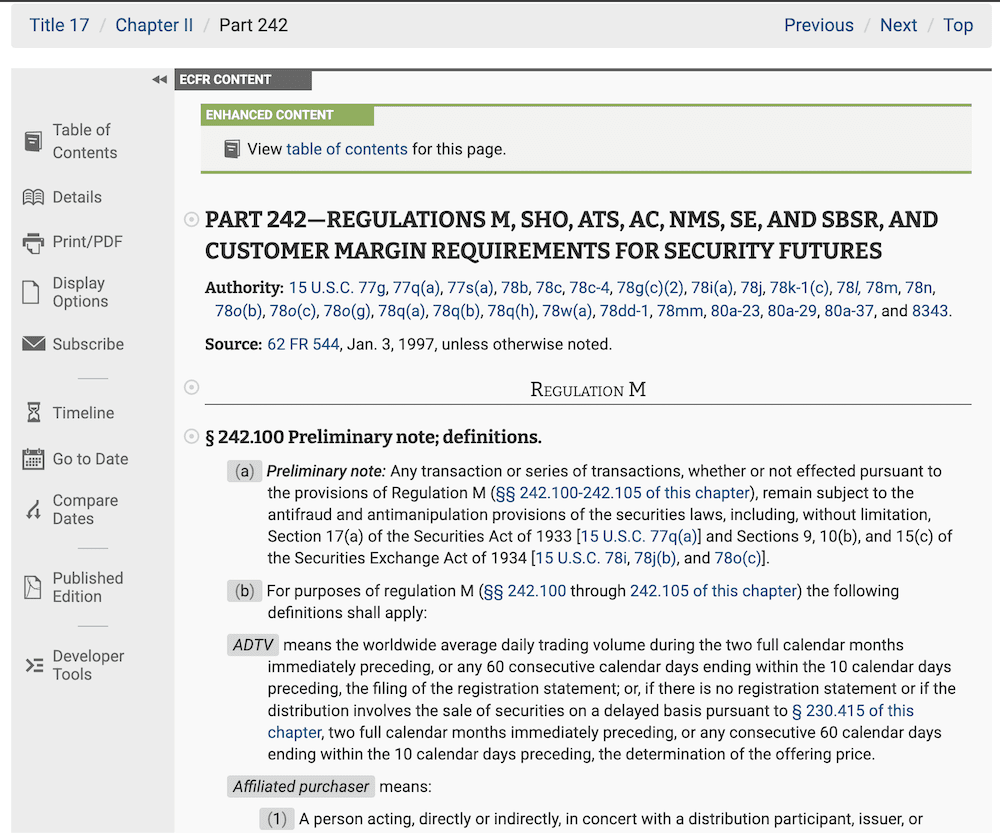
🔔 Muutos havaittu kohteessa https://www.ecfr.gov/current/title-17/chapter-II/part-242:
SEC lisäsi uusia rajoituksia välittäjä-kauppiaille markkinatakaustoimintaan osallistumiselle.
Why PDFs need their own monitors
HTML indexes and homepage monitors will not do this job alone. Many of the documents that actually matter ship as downloadable PDFs: final rules, technical standards, DPAs, SLAs, tender specifications, media kits, rate cards, product manuals. Cookie banners and nav chrome on the HTML landing page are real diffs. They are not a new numbered section inside the PDF, a reworded liability cap, or an addendum that quietly replaced last week's pack. Teams that only watch the HTML index either miss in-file edits (same URL, new bytes) or drown in list reshuffles. Page Deltas reads public HTML and public PDFs with the same brief-and-summary loop. This post is the setup: when to paste the PDF URL itself, when to watch the index or sitemap instead, what to ask for, what to ignore, and how the path differs from a selector-and-diff workflow.
The moves that actually matter
A guidance PDF, circular, or handbook revises a numbered section, table, or defined term. A vendor DPA, SLA, or privacy attachment adds, removes, or rewords a clause family you named. A tender pack, specification, or addendum PDF changes scope, deadline, or eligibility language. A product manual, rate card, or pricing PDF updates a figure or feature claim. A media kit or IR release PDF gains named parties, deal terms, or product claims. A publications index or sitemap gains a brand-new PDF URL under the paths you care about.
What to ignore on purpose
Cover-page branding, pure formatting and pagination reshuffles, unrelated HTML chrome on the landing page that links to the PDF, cookie banners, and "last updated" stamps with no substantive edit inside the document. If you do not name those in the brief, you will spend week one editing ignore clauses.
Related use cases on Page Deltas
PDF monitoring shows up across several desks. Product framing for each lives on the use-case pages: regulatory compliance, Terms of Service and legal, government tenders and RFPs, and newsroom and press. This post is the format how-to that ties them together.
Regulatory compliance monitoring →How this differs from a Visualping-style PDF watch
Classic website monitors in the Visualping family are built around "something on the screen moved." Their online PDF guide typically has you paste a public PDF URL, pick a region in a viewfinder, optionally add an "Alert me when" prompt or keyword filters (keywords on text-mode only), set a fixed check interval (from minutes to monthly by plan), then get email when that region changes. They also note a practical split: monitor the PDF URL when it is stable, or monitor the HTML page that links to it when each new version gets a new URL. Visualping documents a first-100-pages limit on PDF checks. That path works if you want to operate a region-and-diff rig with typed frequencies. Page Deltas asks a different question on the public web. Paste the public PDF URL (or the index / sitemap that lists new PDFs), write a natural-language brief, and an LLM judges whether the change matches what you asked for. The alert opens with a summary plus before/after screenshots. No region picking for the primary workflow. Cadence is adaptive (active sources more often, quiet ones less; paid plans get priority checking). Full plan-for-plan comparison lives on Page Deltas vs Visualping. This post is the PDF-desk setup.
Visualping-style path
Paste the PDF, pick a region or selector, set a poll interval, often add keyword filters. Email (or Slack on higher tiers) inherits the diff-first model unless you build more. Long PDFs may stop at a documented page cap.
Page Deltas path
Paste the public PDF URL, the HTML index that links to PDFs, or a publications sitemap. Write the brief. Attach Slack / Discord / Teams / email / a signed webhook. AI filtering and summaries are on every plan, including Free. You still decide whether to act. The tool's job is to stop the document firehose before it hits the channel. Public files only; authenticated portals are on the roadmap.
Page Deltas vs Visualping →Setup: first PDF alert in about five minutes
Same path as our how to monitor website changes walkthrough, scoped to public PDFs.
Decide: PDF URL, index page, or sitemap
HTTPS recommended. Public files only. Use the PDF URL itself when the document updates in place (same link, new content). That is the common pattern for guidance circulars, vendor DPAs hosted at a stable path, and many product manuals. Use the HTML index or listing page when each new version gets a new PDF URL (tax-year forms, dated bulletins, versioned tender packs). Use a sitemap monitor when you want newly posted document URLs under publications, guidance, or docs paths without watching every file by hand. One source (one PDF, one index, or one sitemap), one monitor.
Create a free Page Deltas account
Sign up at pagedeltas.com/register. No credit card. Free plan: 10 monitored URLs or sitemaps, unlimited checks (best-effort frequency), AI filtering and summaries, unlimited teammates, Slack / Discord / Teams / email / signed webhooks, REST API and MCP, 14-day history.
Connect the channel where document triage already happens
Open Channels, then add Slack, Microsoft Teams, or Discord via an incoming-webhook URL (or email / signed webhook). Click Send test. Do the test. A working monitor with a silent channel is how people decide the product is broken. Most teams use something like #regulatory-docs, #vendor-legal, or #bid-alerts, not a private inbox. Full Slack wiring is in How to get website change alerts in Slack.
Create the monitor with a real brief
Click New monitor. Paste the PDF URL, index page, or sitemap. Write the description like a brief, not a search query. Three pieces: what the document is, which section or clause families matter, what to ignore. Example (guidance PDF): Public PDF circular for [regulator / topic]. Alert me when numbered sections, tables, or defined terms affecting [obligation family] are added, removed, or reworded. Ignore cover branding and pure formatting. Summarise the section family and direction of change.
Let the first check establish the baseline
A new monitor is due immediately. The first check stores the fingerprint. You should not expect a "section 4.2 amended" alert on minute one unless the file actually changed between two checks in a way that matches the brief. Use Check now after you tighten the brief.
Copy-paste briefs for common PDF jobs
Steal the shape. Swap the documents and topics. Vague briefs ("tell me when this PDF changes") recreate a firehose on long handbooks and busy publications indexes.
Regulatory guidance / circular PDF
Public PDF bulletin or circular for [regulator / topic]. Alert me when numbered sections, tables, or defined terms are added, removed, or reworded. Ignore cover-page branding and pure formatting. Summarise the section family and direction of change.
Vendor DPA / SLA / privacy PDF
Public DPA, SLA, or privacy attachment for [vendor]. Alert me when liability caps, data-processing clauses, subprocessors, termination, or arbitration language is added, removed, or reworded. Ignore cover branding and formatting-only edits. Summarise the clause family and direction of change.
Tender pack / specification / addendum PDF
Public tender pack or addendum PDF for [portal / opportunity]. Alert me when scope, eligibility, deadlines, evaluation criteria, or pricing instructions change. Ignore cover sheets and pure formatting. Summarise what moved and whether it looks material to bid/no-bid.
Product manual / rate card / pricing PDF
Public product manual, rate card, or pricing PDF for [competitor / product]. Alert me when prices, tier names, feature claims, or limits are added, removed, or reworded. Ignore branding and layout-only edits. Summarise the commercial change in one or two sentences.
Media kit / press-release PDF
Public press-release PDF or media kit for [company / topic]. Alert me when new sections, named parties, deal terms, or product claims are added or reworded. Ignore cover branding and pure formatting. Summarise the section family and direction of change.
Publications index (when PDF URLs change)
[Regulator / vendor / portal] publications or documents index. Alert me when a new PDF link appears under [guidance / forms / tenders / legal] paths, or when an existing link's label or version string changes. Ignore nav chrome and unrelated news widgets. Summarise the new or changed document title.
Publications sitemap for new PDF URLs
[Org] publications or docs sitemap. Alert me when a new URL appears under guidance, rules, tenders, or legal paths (especially .pdf paths). Ignore unrelated site sections if the sitemap is broad. Summarise the new URL path and title if present.
What else to watch (without stuffing one monitor)
PDFs are one format. Pair them deliberately with the HTML sources that point at them. Do not dump everything into one brief.
Stable PDF URL vs versioned URL
Put the in-file brief on the PDF URL when it updates in place. Put the "new document posted" brief on the HTML index or sitemap when each revision gets a new URL. One vague monitor on the whole domain either fires constantly or misses the attachment that rewrote your control.
Desk-specific how-tos
When the document is a rule or bulletin, use the regulatory compliance setup. When it is a vendor contract attachment, use Terms of Service changes. When it is a tender pack, use government RFPs and tenders. When it is a press PDF, use newsrooms and press releases. This article is the shared PDF pattern those desks reuse.
How to monitor regulatory compliance changes →Signed webhook / API into GRC or bid tools
If the alert should open a row in your GRC, contract tool, or bid tracker instead of (or as well as) pinging humans, use a signed webhook or the REST API. Pipe the summary into the system of record; keep the human decision there. More on turning pages into a change feed: How to turn any website into a change API.
How to turn any website into a change API →Optional: media and social reaction
Page Deltas watches the primary source PDF or index. If you also need keyword mentions of the same update across LinkedIn, X, Reddit, Facebook, YouTube, and Hacker News after it drops, that is a sibling job on KWatch.io. If the signal is what a specific executive or company account posts on LinkedIn or X, that is MultiFollow.io. Use Page Deltas for the document, KWatch for listening, MultiFollow for profiles.
Keep the channel useful after day one
Treat the brief as the product. A channel full of noise dies faster than an empty one.
One PDF (or one index), one URL, one brief
Start with the 5 to 15 documents your team already re-downloads by hand. Expand later. Several specific monitors beat one vague monitor on "all PDFs."
Edit the brief, don't mute the channel
When an alert is noisy, open the summary, add an explicit ignore clause (for example, cover branding or formatting-only edits), then click Check now. The new brief applies on the next check, not retroactively.
Thread the response
👀 reviewing, ✅ escalated / no action / filed, keeps the docs channel scannable. The alert is the start of triage, not a substitute for reading the file.
AI triage is not legal or bid advice
The summary is meant to get a qualified reviewer to the right section faster. It does not replace reading the full PDF, checking figures, or deciding applicability, bid/no-bid, or remediation.
Honest limits
Plans if you outgrow ten URLs: Starter $29 / 150 URLs, Pro $79 / 1,000, Business $199 / 5,000, Scale $499 / 20,000, Enterprise custom. AI, screenshots, all five alert channels, unlimited checks, and unlimited team members are included on every tier; paid adds priority checking and longer history. Free includes REST API and MCP.
Public PDFs only
Login-walled document portals, SSO filing systems, and subscriber-only packs are not supported yet. Authenticated monitoring is on the roadmap. Anything visible without signing in is fair game, including public PDF URLs, public document indexes, and public publications sitemaps.
Not a visual-regression tool
If the job is "did this pixel move 20px on a rendered page," a visual-diff product still wins. We extract meaningful content from the public PDF (or HTML index) and ask whether the leftover change matches your brief.
Not a document-management or e-signature system
You get alerts, summaries, and before/after screenshots of versions captured while the monitor was on. That is useful for "what this public PDF said on Tuesday." It is not a DMS, a redline suite, or a substitute for counsel reading the instrument.
Cadence is adaptive, not a typed two-minute poll
Check now is the escape hatch. Higher plans get scheduling priority. Quiet manuals may change rarely; busy tender portals and guidance libraries move more often. Adaptive cadence is usually enough once the brief is tight. For a known publication window, use Check now and a dedicated monitor on the exact PDF or index that is expected to move.
Frequently asked questions
- Do you monitor PDF documents?
- Yes. If the PDF is publicly reachable, Page Deltas reads its contents and alerts you when material text changes, with an AI summary of what was added, removed, or reworded. Paste the PDF URL as its own monitor.
- What if each new version gets a new PDF URL?
- Monitor the HTML index or publications page that links to the PDFs, or point a sitemap monitor at the publications sitemap. Alert on new links or new .pdf paths rather than watching a URL that will never update in place.
- Will it catch only the section I care about?
- Name the section or clause families in the brief and explicitly ignore cover branding and formatting. Tighten after the first noisy week. Vague briefs recreate a full-document firehose.
- Can I prove what a PDF said on a given date?
- Yes, for versions captured while your monitor was on: timestamped history with before/after screenshots. Higher plans retain that history longer. It is not a permanent public Wayback archive of every PDF on the internet.
- Can I send different document sets to different Slack channels?
- Yes. Add one incoming-webhook channel per destination under Channels, then attach the right ones per monitor (or leave unchecked to use org defaults).
- How is this different from Visualping's PDF monitoring guide?
- That guide leans on region selection in a viewfinder, fixed check frequencies, optional keyword filters on text-mode, email-first alerts, and a documented first-100-pages limit. Page Deltas uses a natural-language brief, AI filtering/summaries on every plan (including Free), adaptive cadence, native Slack / Discord / Teams / email / signed webhooks, and the same loop for public HTML indexes and public PDFs, plus sitemap discovery for newly posted document URLs. Page Deltas does not monitor login-walled portals yet. Full comparison: Page Deltas vs Visualping.
- Is this a substitute for reading the PDF?
- No. It is a detection and triage layer so you spend time on material amendments instead of re-downloading a dozen files on a calendar. Final legal, compliance, or bid judgment stays with your team.
Author
Julien, Product Manager at Page Deltas. Pick the one public PDF your team already re-downloads before standup. Paste that URL (or the index / sitemap that lists new versions), write the sentence you'd send the desk about which sections matter, connect the channel people already sit in, send a test, and wait for the first real match. Tighten the ignore list once. That is usually the whole PDF setup.
Start with one public PDF
Free plan, no card. Create an account, paste the guidance PDF, DPA attachment, tender pack, or publications sitemap you already babysit, drop in a brief from above, and route the alert to the channel where document triage already happens.